
Select your details below
arrowEngine Supply and Fitting A Recon Land Rover Freelander 2 Engine Step by Step from My Weekend Project
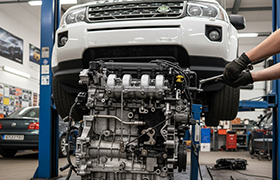
Engine Supply and Fitting A Recon Land Rover Freelander 2 Engine Step by Step from My Weekend Project
Why Did I Decide to Source A Reconditioned Land Rover Freelander 2 Engine Instead of Scrapping the Whole Car?
When my Freelander 2 started burning oil like a bonfire and the compression test came back with results that made my mechanic wince, I faced a decision most owners dread — do I write the car off or invest in a proper fix? The bodywork was solid, the interior was clean, and the gearbox was running smoothly. Scrapping it felt wasteful and, frankly, expensive given what I’d get back. That’s when I started researching a remanufactured Land Rover Freelander 2 engine as a serious alternative, and the more I dug in, the more it made financial and practical sense. A brand-new factory unit was quoted at eye-watering prices, and frankly, for a vehicle this age, that kind of spend rarely pays off at resale. The reconditioned engine price I was seeing online, on the other hand, was far more digestible — typically a fraction of what the dealer wanted.
What really settled it for me was understanding what a recon engine actually is. Unlike a loosely termed “second hand” pull-out from a scrapyard, a properly reconditioned unit goes through a full strip-down, inspection, and rebuild process — cylinder head resurfacing, crankshaft grinding, oversized pistons and rings where needed, and engine block honing to restore tolerances and clearances back to OEM (Original Equipment Manufacturer) specification. Many are built to British Engineering Standards (BS EN), and the better suppliers will carry out compression testing before the unit leaves the workshop. Knowing this, the rebuilt engine route felt far more trustworthy than gambling on a mystery pull-out from an unknown donor vehicle.
Where Is the Best Place to Buy A Replacement Land Rover Freelander 2 Engine — and What Should You Actually Check Before Paying?
Sourcing the right engine took me longer than I expected, and I’d be lying if I said I didn’t nearly make a costly mistake early on. My first instinct was to search locally — typing things like engine sales near me and refurbished engines near me into Google. I got dozens of results ranging from proper specialist suppliers to what looked suspiciously like one-man-band operations photographing engines in muddy yards. The price range was enormous. Some listings for a used Land Rover Freelander 2 engine were suspiciously cheap — under £400 — while reputable suppliers were quoting £900 to £1,400 for a fully reconditioned unit, VAT inclusive. That gap in pricing tells a story, and it’s worth understanding what you’re actually comparing.
The things I learned to check before handing over any money were straightforward but critical. First, always ask for verified mileage documentation on any used engine for sale near me — a low-mileage claim means nothing without paperwork. Second, ask about the donor vehicle condition — was it a write-off due to fire or flood damage? Third, check whether the supplier offers an HPI clearance check on the unit’s history and whether there’s a buyer protection guarantee or secure checkout. Customer testimonials and Trustpilot ratings are genuinely useful here — not just star scores, but the actual written reviews that describe real experiences. I eventually chose a specialist who offered a reconditioned engines price list UK on their website, fixed-price quotes with no hidden surcharges, and a clearly explained surcharge exchange policy for returning my old core unit. That transparency built the trust I needed.
How Do Reconditioned, Remanufactured and Used Engines Differ — and Which Is Right for A Freelander 2?
This is the question I wish someone had answered for me clearly at the start, because the terminology thrown around online is genuinely confusing. A used motor engine — sometimes called a 2nd hand engine or second-hand unit — is essentially a pull-out from a scrapped vehicle. It’s been tested to run, sometimes cleaned up, and sold as-is. The price is attractive, and if you find one from a low-mileage, well-documented donor vehicle, it can be perfectly adequate for a short-term fix. However, you are inheriting whatever wear and unknown history that engine carries. For a Freelander 2 — a vehicle known for specific engine vulnerabilities, particularly in the 2.2 TD4 diesel — buying blind can be a gamble that costs more in the long run.
A remanufactured Land Rover Freelander 2 unit, on the other hand, sits at the top end of the reconditioned spectrum. Remanufacturing is a more rigorous process than basic reconditioning — it involves disassembling the engine to individual components, replacing all wear items with new OEM parts, machining components like the crankshaft back to factory-specified tolerances, and reassembling the engine under controlled conditions. The breakdown of machining costs in a remanufactured unit is reflected in the price, but so is the quality. A reconditioned engine, in most suppliers’ language, falls somewhere between a second-hand pull-out and full remanufacture — varying considerably by supplier. The critical point is to ask your supplier exactly what processes their unit has been through, what parts have been replaced, and what warranty claim procedure applies if something goes wrong after fitting. Don’t assume — ask.
What Does Engine Supply and Fitting Actually Involve — and Is It Worth Having It Supplied and Fitted in One Place?
Once I’d sourced my replacement Land Rover Freelander 2 engine, the next question was whether to have it fitted by the same supplier or to buy the unit and take it to my local garage. There are arguments for both, but after speaking to a few workshops, I went with a reconditioned Land Rover Freelander 2 supplied and fitted service from a single specialist — and it made the whole process considerably smoother. The primary advantage is accountability. When engine supply and fitting comes from one place, there’s no finger-pointing if something goes wrong. The supplier can’t blame the fitter, and the fitter can’t blame the engine. One warranty, one point of contact.
The physical process of engine supply and fit is far more involved than simply bolting in a new unit. My specialist used a proper engine hoist and specialised tools to drop out the old unit — a job that alone takes several hours on a Freelander 2 given the engine bay packaging. Once the new engine was positioned, all ancillary parts including the water pump and timing belt were replaced as a matter of course — these are wearing items that make no sense to leave on a reconditioned unit. A full fluid flush and refill was carried out, covering coolant and oil, and once the engine was running, the technician connected a diagnostic reader to check for any diagnostic trouble codes (DTCs) and carry out ECU re-programming where needed. Fully certified technicians working in a VOSA approved garage — that combination was non-negotiable for me given the complexity of the job.
What Did the Reconditioned Engine Price List Look Like in the UK — and How Does the Cost of A Recon Engine Compare to Alternatives?
I kept detailed notes on pricing during my research, and the reconditioned engines price list I compiled gave a useful snapshot of the market in the UK. For the Freelander 2’s 2.2 TD4 diesel, reconditioned engine prices from reputable UK suppliers ranged from approximately £850 to £1,500 for the unit alone, depending on specification and warranty length. Adding professional fitting — labour rates per hour varied between £60 and £95 depending on location and garage type — brought the total engine replacement cost UK to somewhere between £1,400 and £2,200 in most cases. That’s not pocket change, but compared to a main dealer quote for a new engine (which I received at over £5,000 all-in), the saving was substantial.
For honest comparison: a straight used engine sale unit from a breaker’s yard — a genuine second-hand engine with documented low mileage — typically came in between £350 and £700. The appeal is obvious. However, labour to fit is the same regardless of what engine goes in, so the saving on the unit itself narrows considerably once you factor in the total job cost. And if that cheaper unit fails within 12 months, you’re paying labour again. The cost of reconditioned engine versus used isn’t just a unit price comparison — it’s a whole-life cost question. Market value depreciation on the vehicle also matters; if your Freelander 2 is worth £4,000, spending £2,000 to keep it in excellent mechanical condition is a reasonable investment. Spending £5,500 on a new engine is not.
What Were the Results After Fitting and What Honest Lessons Would I Pass on to Anyone Considering A Recon Engine for Their Freelander 2?
The results, I’m pleased to say, were genuinely impressive. The remanufactured Land Rover Freelander 2 unit I had fitted transformed the car. Cold starts are crisp, there’s no smoke at idle, oil consumption is back to normal, and the power delivery feels noticeably stronger than the tired original.
The compression testing carried out by the supplier before despatch, and repeated by my fitter post-installation, showed consistent results across all cylinders — exactly what you’d hope to see from a properly rebuilt unit. The internal combustion assembly had clearly been done with care. Three months on, there have been no warning lights, no leaks, and no drama.
Categories
- 2013 Dubai Motor Show
- 2013 Frankfurt Motor Show
- 2013 Geneva Motor Show
- 2013 Shanghai Motor Show
- 2013 Tokyo Motor Show
- 2014 Detroit Auto Show
- 2014 Geneva Motor Show
- 2014 New York Motor Show
- 2014 North American International Auto Show
- Alfa Romeo
- Aston Martin
- Audi
- Audi A4 Check Engine Light
- Automotive News
- Avensis
- Beijing International Motor Show 2014
- BMW
- Cadillac
- Chevrolet
- Chicago Auto Show 2014
- Chrysler
- Citroen
- Daihatsu
- Detroit Motor Show 2013
- Diesel Engines
- Engines
- EV
- Fiat
- Ford
- General
- General Motors
- Geneva Motor Show 2014
- GM
- Guest Post
- Honda
- Hyundai
- Ideal Engines Reviews
- Infiniti
- Infographics
- Isuzu
- Jaguar
- KIA
- LA Motor Show 2013
- Lancia
- Land Rover
- LandRover
- Lexus
- Lotus
- Maserati
- Mazda
- McLaren
- Mercedes Benz
- Mini
- Mini Cooper S
- Mitsubishi
- New Technology
- Nissan
- Peugeot
- Porsche
- Range Rover
- Renault
- SEAT
- Skoda
- Smart
- Subaru
- Super Cars
- Suzuki
- Top Ten
- Toyota
- Transmissions and Gearboxes
- Uncategorized
- Vauxhall
- Volkswagen
- Volvo
- VW