
Select your details below
arrowExpert Guide to Rebuilt Nissan Almera Engines: What to Expect When Buying Used Nissan Almera Engine
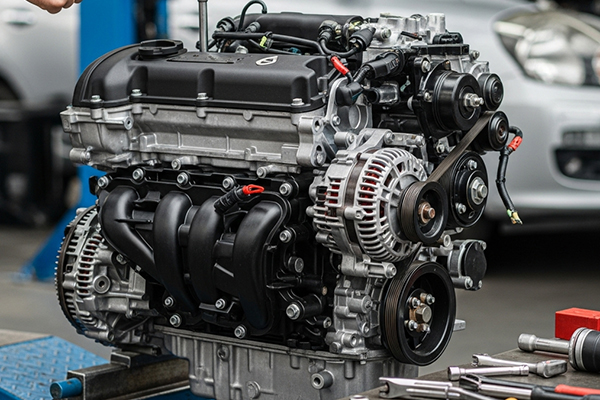
Expert Guide to Rebuilt Nissan Almera Engines: What to Expect When Buying Used Nissan Almera Engine
How Do You Know If A Reconditioned Nissan Almera Engine Is Truly Rebuilt to A Reliable Standard?
Understanding whether you are purchasing a genuinely rebuilt engine or something dressed up to look good is one of the toughest parts of the buying journey. In my early days sourcing engines for repairs, I learned quickly how crucial it is to distinguish between a properly reconditioned unit and a lightly cleaned one. A best reconditioned engine undergoes a full strip-down. Every component—from the crankshaft to the piston rings—is inspected, measured, and either machined or replaced. Sellers who hesitate to provide information about resurfacing, honing, head skimming, crankshaft regrinding, or valve seat recutting likely haven’t performed a full rebuild. A reputable seller provides detailed reports or at least clear photos showing the engine mid-rebuild, including the block on the machine, newly honed cylinders, and fresh gaskets during assembly. Without this, you are taking someone’s word, and experience has taught me that trust alone is expensive.
From my practical dealings in the market, the most reliable vendors don’t wait for you to ask—they often have ready files containing compression tests, leak-down results, oil pressure reports, and bench-testing clips before offering the engine for sale. This is important because many buyers assume a shiny engine automatically means internal health—but cosmetic cleaning is easy and often hides deeper structural issues. A proper rebuilt engine will have new bearings, seals, gaskets, piston rings, timing components, and a thoroughly pressure-tested cylinder head. Sellers who provide these details upfront are the ones worth relying on, while those who provide generic statements such as “fully done” often sell engines that fail just months after installation. A truly rebuilt engine behaves differently in performance, reliability, and longevity, and only transparent work guarantees that level of dependability.
What Should You Check Before Buying A Used Nissan Almera Engine with Unknown Mileage?
When I first began evaluating options for a used engine, I discovered that the biggest mistake buyers make is focusing only on mileage. Mileage tells only part of the story—maintenance tells the rest. Many used Almera engines come from fleet vehicles that were driven long distances but well serviced, and others come from privately owned cars with low mileage but terrible upkeep. You should always request the engine’s donor car information, including service history, last oil change, timing chain condition, and whether the vehicle was ever overheated. One of the simplest yet most overlooked things to check is the oil colour. Dark tar-like oil indicates poor maintenance, while metal flakes suggest internal wear. Seller’s unwilling to share engine code confirmation, or who cannot explain which Nissan Almera variant the engine came from, should be approached cautiously.
Compatibility is another factor many buyers’ underestimate. Nissan Almera engines may appear similar externally, but internal components, sensors, harness connections, ECU compatibility, and even mounting brackets vary between years. A seller who cannot clearly explain which models the engine fits is likely inexperienced or deliberately vague. When these details are ignored, the buyer ends up paying for modifications during installation or faces repeated check-engine lights due to mismatched components. This is why in some cases, choosing a remanufactured Nissan Almera engine is a smarter option—it ensures the unit has been standardised, tested, and verified for compatibility, reducing installation complications and long-term risk.
When Is A Replacement Nissan Almera Engine A Better Option Than A Repair?
In many real scenarios, engine failure is so severe that repairs simply aren’t cost-effective. I once handled a customer case where the vehicle had suffered oil starvation, causing rod knock, crankshaft scoring, and severe bearing wear. The repair cost exceeded the value of the car. In such situations, turning to a replacement Nissan Almera engine is not only sensible but financially smarter. Replacement engines often cost less than extensive repairs that may still not restore full performance. Engines damaged by overheating, cracked blocks, failed timing chains, or oil pump failures generally benefit more from replacement than repair attempts. The real advantage is reliability—you’re installing a complete unit instead of patching up structural issues.
There’s also peace of mind that comes with documented testing and verified engine health. When choosing an engine with installation services included—such as reconditioned Nissan Almera engine supplied and fitted packages—the supplier takes full technical responsibility for both the engine and the fitting. This significantly reduces the chances of installation-related failures and eliminates disputes over who is at fault if an issue arises. In my experience, the “supply and fit” route is the safest path when replacing an engine because reputable suppliers rely on their own skilled mechanics, proper torquing procedures, accurate timing calibration, and systematic pre-fit inspections that general mechanics often overlook.
What Should You Expect From A Supplier Offering Engine Supply and Fitting Services?
My first encounter with a professional workshop offering engine supply and fitting was eye-opening. I realised immediately that installation matters just as much as the condition of the engine itself. A quality fitting service begins with preparation. This includes pre-install inspection of the engine, checking oil seals, replacing external gaskets, verifying sensor compatibility, and ensuring the timing system is correctly set. During installation, experienced technicians torque every bolt to manufacturer specifications, bleed cooling and lubrication systems, prime the oil pump, calibrate idle settings, and run the engine through initial testing cycles. This level of precision drastically reduces the risk of engine failure once the vehicle is on the road.
A trustworthy service also provides structured warranties covering both labour and the engine itself. This was especially valuable when I was evaluating a second-hand Nissan Almera engine that lacked history. Professional workshops don’t just install—they diagnose potential issues beforehand, including checking wiring harness compatibility, looking for vacuum leaks, and confirming ECU communication. They provide detailed reports after installation, showing temperature readings, oil pressure levels, and test-drive results. Sellers who cannot offer this level of thoroughness are unlikely to provide reliable installation, and the consequences can be costly. Professional fitting protects your investment, ensures long-term engine stability, and removes the uncertainty that often comes from mixing used engines with inexperienced mechanics.
How Do You Evaluate the Quality of A Used Engine for Sale Near Me Without Specialist Knowledge?
The search for a engine for sale near me can be overwhelming if you’re not mechanically inclined, but there are straightforward checks anyone can perform. Start by requesting a cold start video. A cold start reveals more than any polished exterior—listen for rattles, timing chain noise, knocking, or excessive smoke. Ask the seller for a quick video of the engine revving lightly and returning to idle. If the revs fluctuate, it may indicate vacuum leaks, air-flow sensor issues, or internal compression inconsistencies. You should also examine the oil cap and dipstick for traces of milky residue, which signals coolant mixing with oil due to head gasket failure.
Even if the engine is out of the car, ask for pictures of the spark plugs—uneven plug colouring can reveal cylinder-specific problems such as poor compression or oil consumption. A good seller won’t hesitate to remove the sump to show you the internal cleanliness of the engine. Clean internals with consistent oil colour are a positive sign. When the seller hesitates or claims they don’t have time for these checks, consider it a warning. Good-quality used engines almost always come from cars with documented service histories, while bad ones tend to come with excuses. Evaluating these small details drastically reduces the risk of buying a problematic engine.
What Are the Key Signs That A Seller Has No Understanding of A Recon Engine or Its True Market Value?
The final and most overlooked red flag is the seller’s inability to explain what a recon engine actually involves. When a seller cannot confidently discuss the rebuild process, replaced parts, machining work, or testing steps, they are likely offering a quick repair disguised as a full reconditioning. I once questioned a seller claiming to offer recon engines and discovered he didn’t even know the difference between crankshaft polishing and grinding. A proper recon engine undergoes specific mechanical steps including pressure testing, hot-washing, cylinder honing, head refurbishment, valve regrinding, and component replacement. If the seller can’t explain these processes, their “recon” is likely just a cleaned second-hand unit.
Market value is another clue. If a seller is unable to explain typical pricing benchmarks from established suppliers, they’re probably not following proper industry standards. This becomes especially important when comparing options from a replacement engine supplier near me or evaluating quotes for engine supply and fit near me, a reconditioned engine price, or when trying to find engine for my car. A trustworthy seller understands price variations based on machining depth, part quality, and warranty duration. Sellers who push vague prices or avoid financial transparency usually have Nissan Almera engines that don’t meet proper reconditioning expectations.
Categories
- 2013 Dubai Motor Show
- 2013 Frankfurt Motor Show
- 2013 Geneva Motor Show
- 2013 Shanghai Motor Show
- 2013 Tokyo Motor Show
- 2014 Detroit Auto Show
- 2014 Geneva Motor Show
- 2014 New York Motor Show
- 2014 North American International Auto Show
- Alfa Romeo
- Aston Martin
- Audi
- Audi A4 Check Engine Light
- Automotive News
- Avensis
- Beijing International Motor Show 2014
- BMW
- Cadillac
- Chevrolet
- Chicago Auto Show 2014
- Chrysler
- Citroen
- Daihatsu
- Detroit Motor Show 2013
- Diesel Engines
- Engines
- EV
- Fiat
- Ford
- General
- General Motors
- Geneva Motor Show 2014
- GM
- Guest Post
- Honda
- Hyundai
- Ideal Engines Reviews
- Infiniti
- Infographics
- Isuzu
- Jaguar
- KIA
- LA Motor Show 2013
- Lancia
- Land Rover
- LandRover
- Lexus
- Lotus
- Maserati
- Mazda
- McLaren
- Mercedes Benz
- Mini
- Mini Cooper S
- Mitsubishi
- New Technology
- Nissan
- Peugeot
- Porsche
- Range Rover
- Renault
- SEAT
- Skoda
- Smart
- Subaru
- Super Cars
- Suzuki
- Top Ten
- Toyota
- Transmissions and Gearboxes
- Uncategorized
- Vauxhall
- Volkswagen
- Volvo
- VW